
What Is a Media Façade? A Complete Guide for Modern Architecture
Walk through any major city at night and you will notice that some buildings no longer just stand there. They glow, move, tell stories and change character by the hour. These buildings are wearing a media façade, one of the most striking ways modern architecture and lighting technology have come together.
In this guide, we explain what a media façade is, how it works, what types exist, and why it is becoming a signature feature of ambitious projects across Saudi Arabia and the world.
What Is a Media Façade?
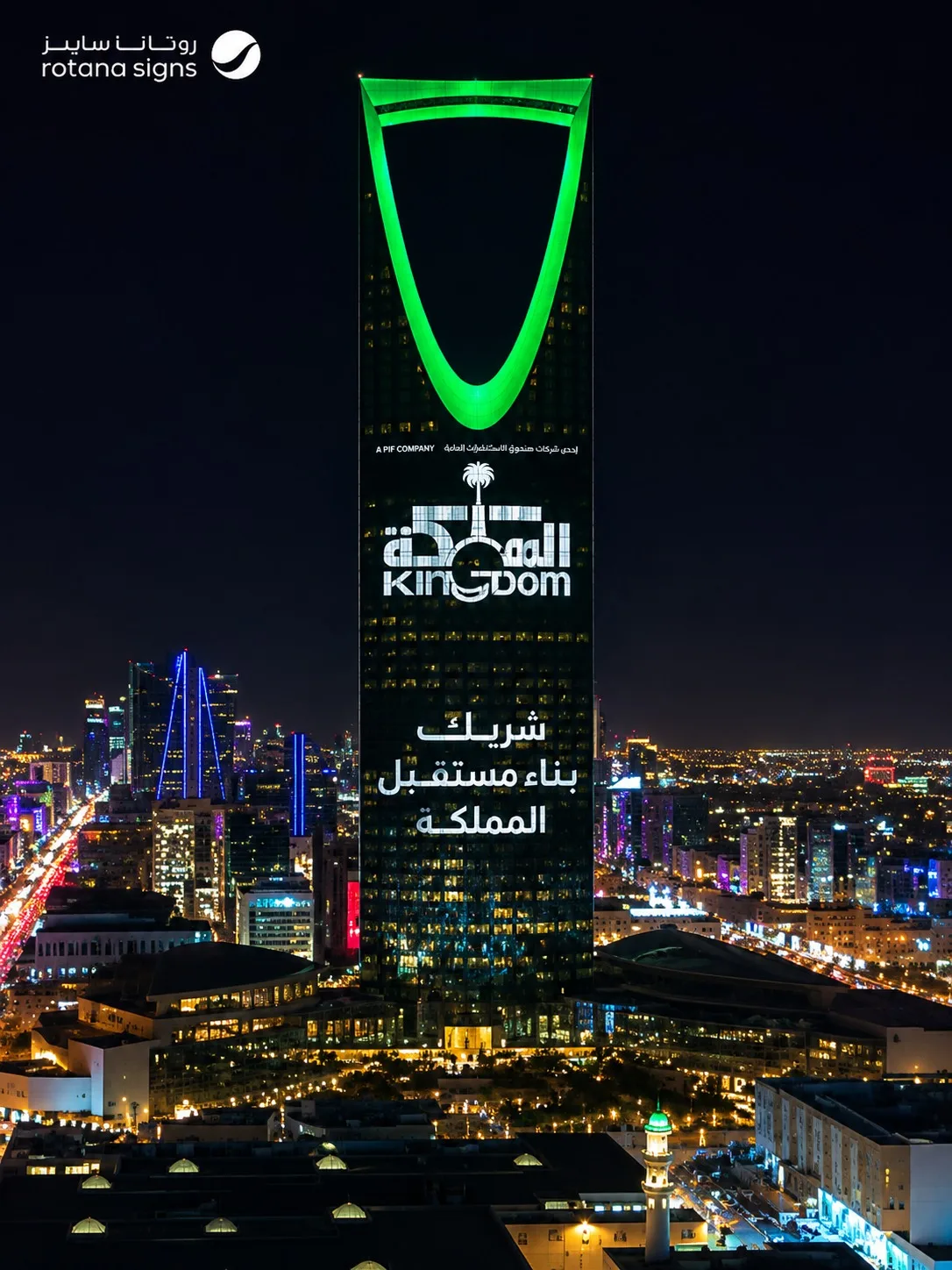
A media façade is an exterior building surface that can display dynamic content such as text, graphics, animation and video. Instead of being a fixed, passive skin, the façade becomes a canvas that can change its appearance on demand. A building might show a calm gradient of color on a quiet evening, a branded animation during a product launch, or a coordinated light show on a national occasion. A well-known example is Kingdom Centre (Al Mamlaka Tower) in Riyadh: its arch glows with color-changing LED lighting at night, and its façades now also carry a large integrated digital screen.
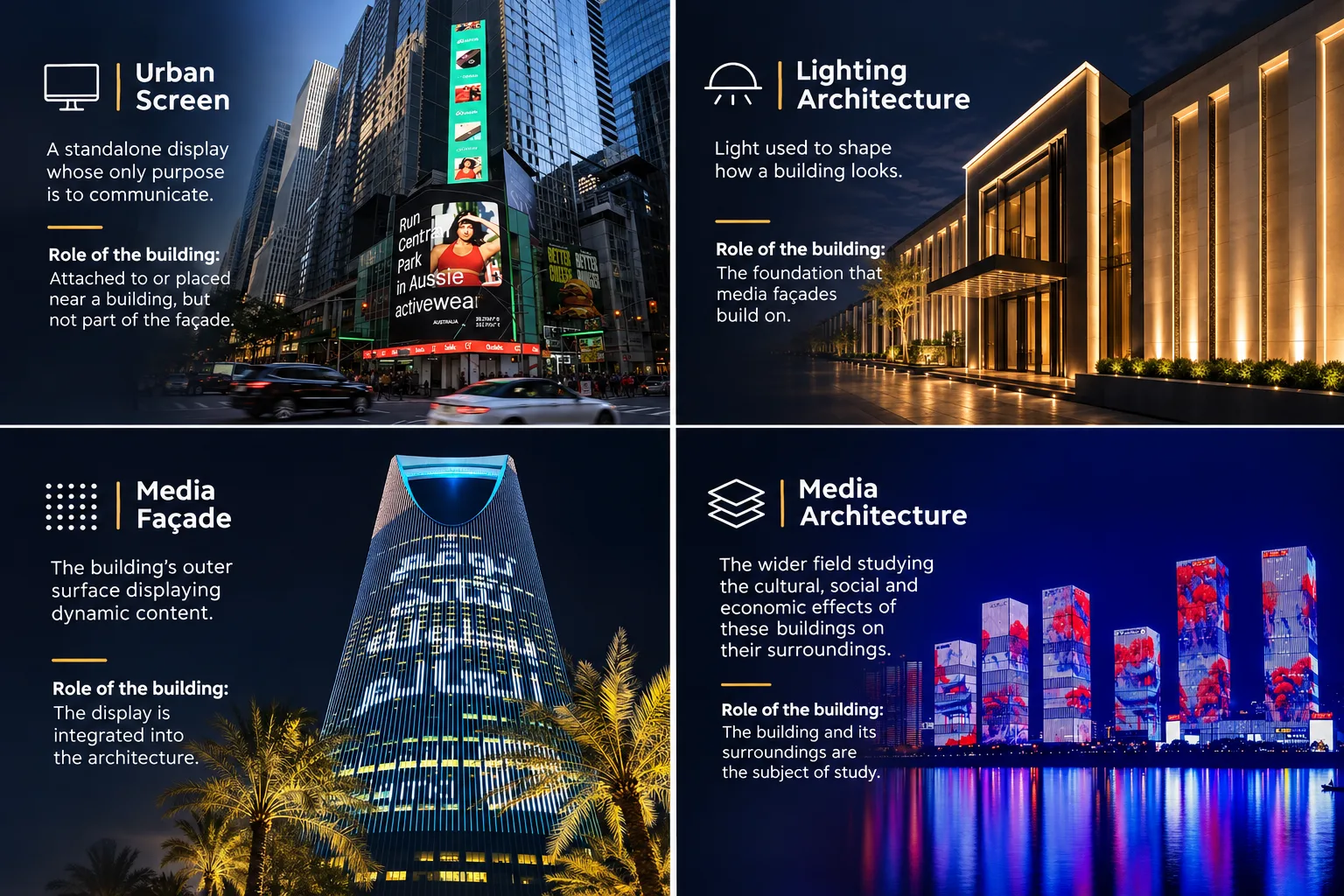
What separates a media façade from an ordinary screen is integration. A large LED screen bolted onto the side of a building is an urban screen: a separate element whose only job is to communicate. A true media façade is built into the architecture itself, so the building and the display are one design. Researchers also distinguish three related ideas. Lighting architecture is about using light to shape how a building looks. Media façades add digital content to the building's surface. Media architecture is the wider field that studies the cultural, social and economic effects of these buildings on their surroundings. In practice, the lines between the three can blur.
A Short History: From Billboards to Living Skins
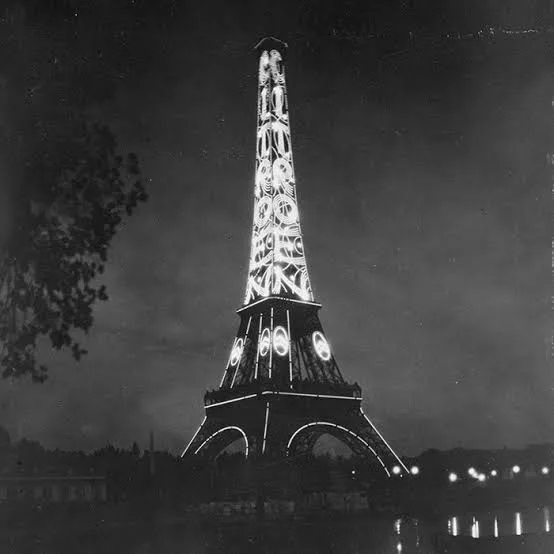
The idea of using a building to communicate is not new. In the early twentieth century, the critic Adolf Behne described "advertising architecture", where buildings carried signs, signboards and billboards. One famous early example is the Citroën campaign, which covered the Eiffel Tower in thousands of light bulbs and turned a monument into a glowing advertisement.
What changed is technology. Modern LEDs are small, bright, efficient and programmable, which means the display can be built into the structure rather than attached to it. Researchers who study this field describe the shift as moving from signs placed on buildings to digital media designed into them from the start.
How Does a Media Façade Work?
At its core, a media façade treats the building like a very large, low-resolution television. Each LED or light point acts as a single pixel, and the content is played across the whole surface.
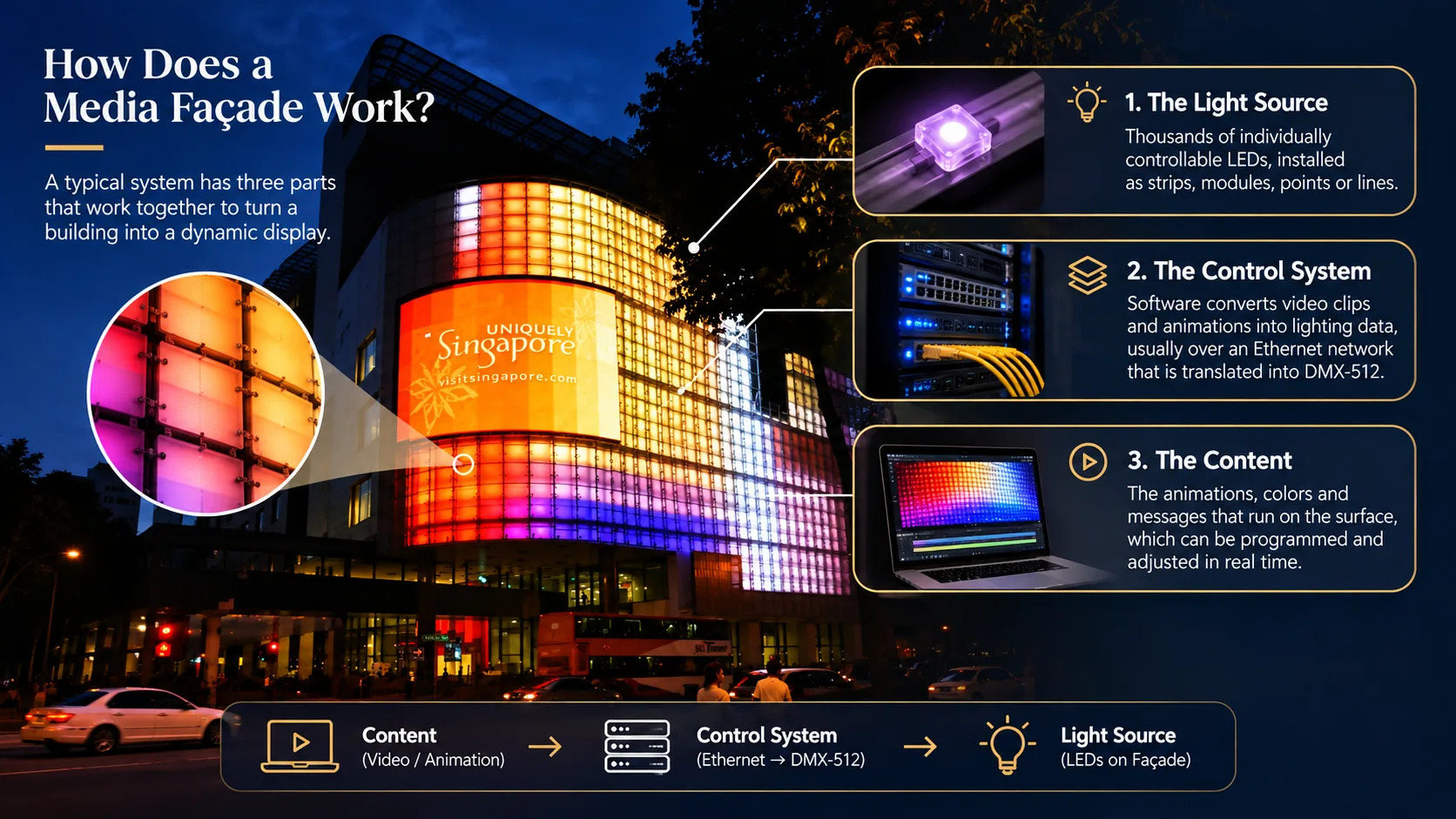
A typical system has three parts:
- The light source. Thousands of individually controllable LEDs, installed as strips, modules, points or lines.
- The control system. Software converts video clips and animations into lighting data. Many systems send this over an Ethernet network that is translated into DMX-512, the standard control protocol used in professional lighting.
- The content. The animations, colors and messages that run on the surface. Some systems even let a designer program the lighting wirelessly while standing in front of the building, so the result can be judged in real time.
Because the building is so large, the viewer sits far from the "screen". That is why media façades usually use fewer, larger pixels than a TV, and why their content is designed to be bold and simple rather than detailed. Sizes vary enormously. Some installations cover only a few dozen square meters, while others wrap several sides of a tower and are visible from great distances.
Types of Media Façades
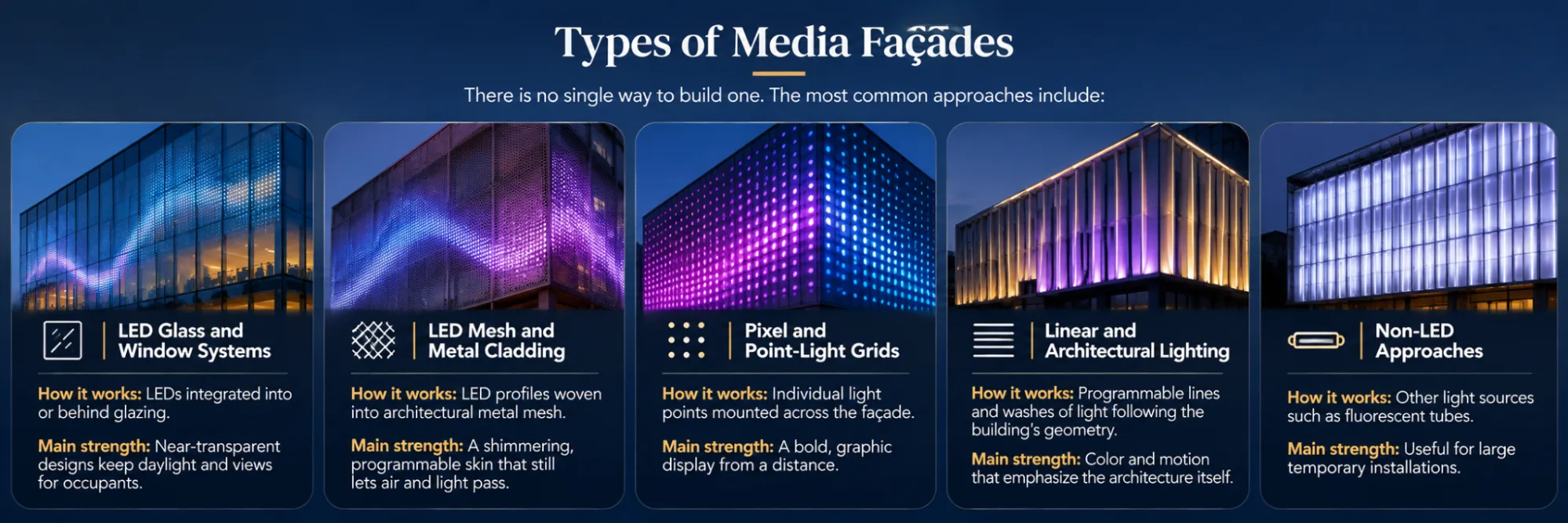
There is no single way to build one. The most common approaches include:
- LED glass and window systems. LEDs are integrated into or behind glazing, sometimes using near-transparent designs so occupants keep their daylight and view.
- LED mesh and metal cladding. Architectural metal mesh can have LED profiles woven into it, creating a shimmering, programmable skin while still allowing air and light to pass through.
- Pixel and point-light grids. Individual light points are mounted across a façade to create a coarse, graphic display.
- Linear and architectural lighting. Programmable lines and washes of light that follow the building's geometry and change color and motion.
- Non-LED approaches. Even fluorescent lights have been used. One notable example was a very large, temporary media façade in Berlin's Potsdamer Platz.
Why Media Façades Matter for Modern Architecture
A building with a voice. A media façade lets a building express identity, mark events, and respond to its city. The same structure can look different every night.
Branding and visibility. For hotels, malls, towers and venues, a recognizable animated façade becomes a landmark that people photograph and share.
Flexibility. Content can change for seasons, celebrations, campaigns and cultural events without touching the building itself.
Interactivity. Some projects let passers-by influence the display, for example by using a mobile phone. This turns a façade into a shared urban experience rather than a one-way message.
A new revenue stream for building owners. Kingdom Centre (Al Mamlaka Tower) in Riyadh shows the scale: according to Rotana Signs, the company that operates the advertising on the tower, a campaign on its façade costs about 1.15 million Saudi riyals for an eight-hour slot, as reported by Al Eqtisadiah in early 2025. Figures like this explain why more owners now treat a media façade as an income-generating asset and not only a design feature.
Media Façades in Saudi Arabia
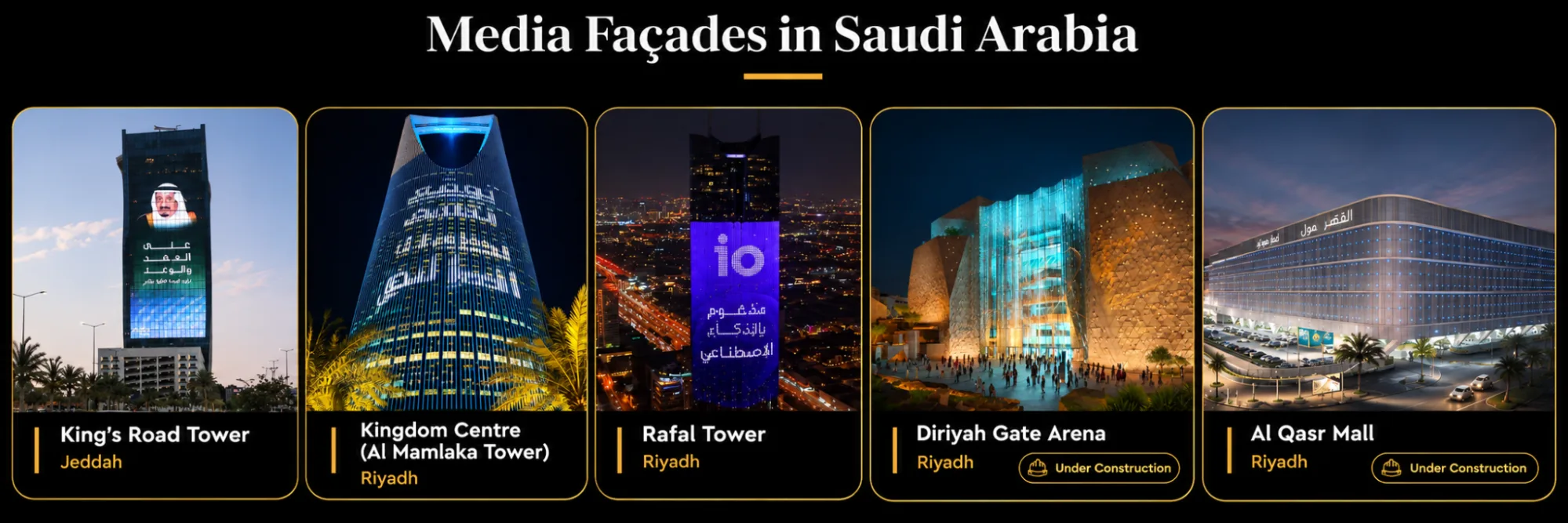
Saudi Arabia has been part of this story for more than a decade, and the pace is increasing with the country's wave of large-scale development.
Kingdom Centre (Al Mamlaka Tower) in Riyadh shows how a landmark can evolve. Its arch has long glowed with color-changing LED lighting, and a recent upgrade added a large integrated digital screen to the tower's façades. Together, the projects below show the range, from advertising-driven towers to cultural and entertainment venues where the façade is part of the architectural story. We look at them in more detail in our case studies of media façades across the GCC.
| Project | City | What makes it notable |
|---|---|---|
| King's Road Tower | Jeddah | Inaugurated in 2010 with close to 10,000 m² of LED across several sides of an occupied tower; near-transparent design keeps daylight |
| Kingdom Centre (Al Mamlaka Tower) | Riyadh | Color-changing LED lighting on the arch; recent upgrade added a large integrated digital screen |
| Rafal Tower | Riyadh | 77 floors, about 305 m; LED façades for interactive content and light shows, with over 48,000 m² of LED area together with its neighbor |
| Diriyah Gate arena | Riyadh | Glass façade with integrated LED that animates colors onto the public space outside |
| Al Qasr Mall | Riyadh | Media façade covering three of the building's four sides |
What to Consider Before Choosing a Media Façade
A media façade is exciting, but it needs to be planned carefully from the start. Key questions include:
- Integration with the façade system. How will the display be fixed to the structure, and how will cabling, access and maintenance work over the years?
- Content strategy. Deciding to turn a building into media architecture immediately raises the question of what it will show. A façade without a content plan quickly becomes an expensive blank wall.
- Brightness and climate. Outdoor LEDs must stay visible in strong daylight and withstand heat, dust and weather.
- Context and restraint. Experts warn that adopting the technology as a passing fashion, without studying its social, cultural and environmental impact, can harm both the building and the city around it. The best projects are designed to suit their surroundings.
- Coordination. Architects, façade engineers, lighting designers, LED manufacturers and content creators need to work together from the early design phase.
Media Façade: What Is the First Step to take?
Arak Lighting provides media façade solutions to buildings. We work as a supplier: we do not carry out the installation; however, we provide the system and stand behind it until the very end. The first step for everything is always a lux study, in Arak, we offer that. Contact us for one, and we will use it to recommend the right solution for your project.
And because we trust what we offer, every solution comes with a warranty starting from 2 and extending up to 10 years, depending on the level of demand and the quality required for your project.
Conclusion
A media façade turns a building from a static object into a living, communicating one. When it is designed as part of the architecture, with clear content and careful engineering, it can give a project a memorable identity and make a lasting impression on the city.
If you are planning a project and want to explore how architectural lighting can bring your building to life, get in touch with the Arak Lighting team.