
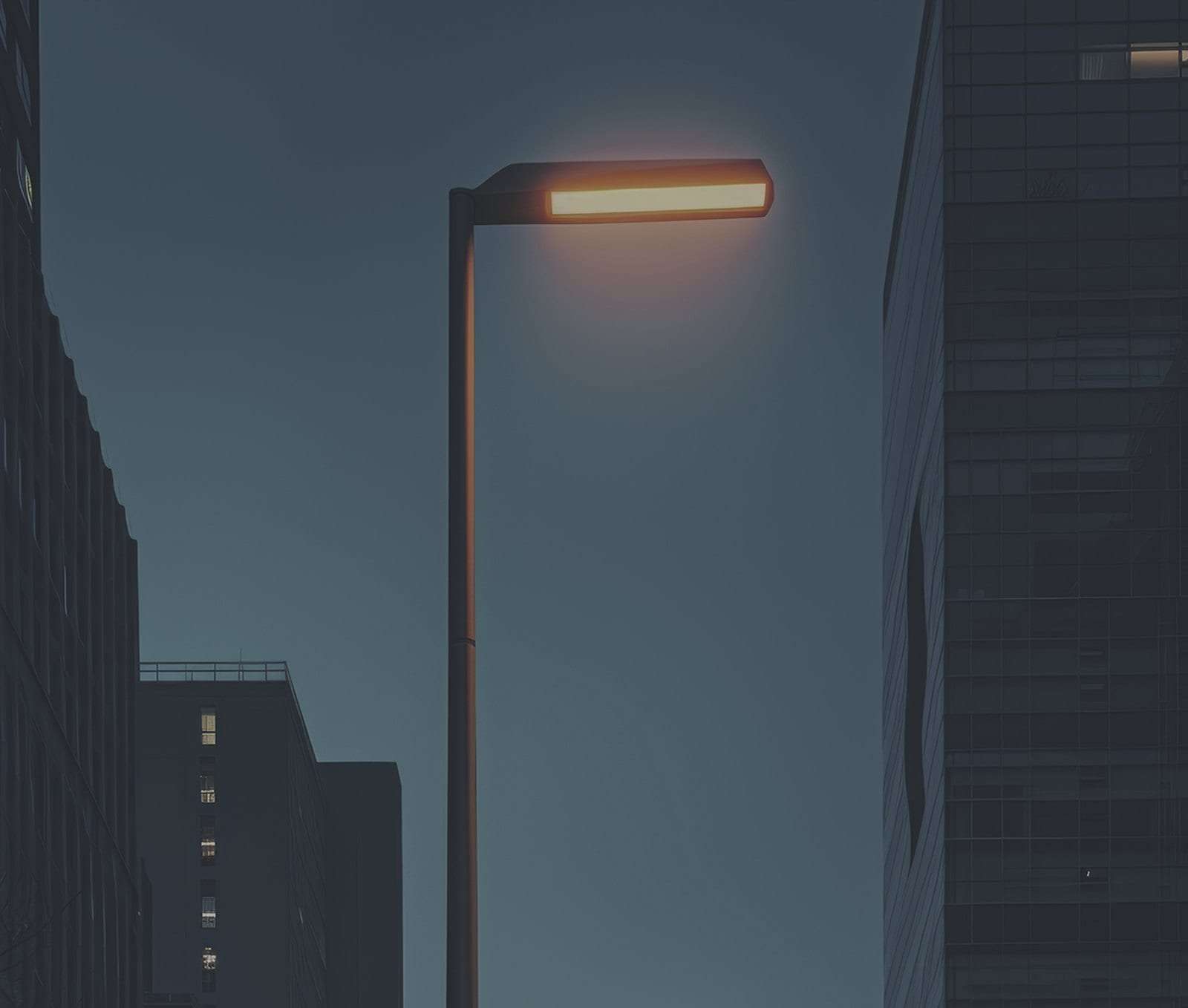
Smart street light poles, designed for you.
Not off the shelf. Every ARAK pole is designed for your street and fully customizable: the height, the finish, and everything it carries.
On one mast
- Smart lighting
- Cameras
- Environmental sensors
- Emergency call
- 5G small cell
- Public WiFi
- Digital display
- Public address
What is a smart pole?
A smart pole is a street light that carries more than a light.
The mast still lights the road. But the same shaft also holds the mobile network, the cameras, the environmental sensors, the digital signage and an emergency call button, running on the power feed and the foundation the street light already needed. One column instead of six. One trench instead of six.
- 01
Smart lighting
The LED head, dimmed and scheduled from the control centre.
- 02
Cameras
Fixed and PTZ, at the height that captures plates and faces.
- 03
Environmental sensors
Particulates, temperature, humidity and noise.
- 04
Emergency call
One button, straight through to the operations centre.
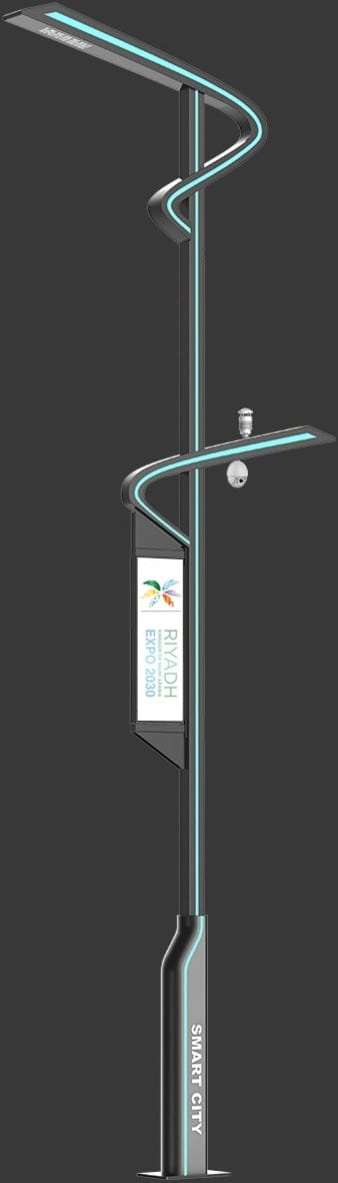
Quantum, in one configuration. The devices are specified per project.
- 05
5G small cell
Mounting for the small cells dense coverage needs.
- 06
Public WiFi
Access points fed from the pole's own fibre run.
- 07
Digital display
Wayfinding, public information or event programming.
- 08
Public address
Addressable speakers for announcements and alerts.
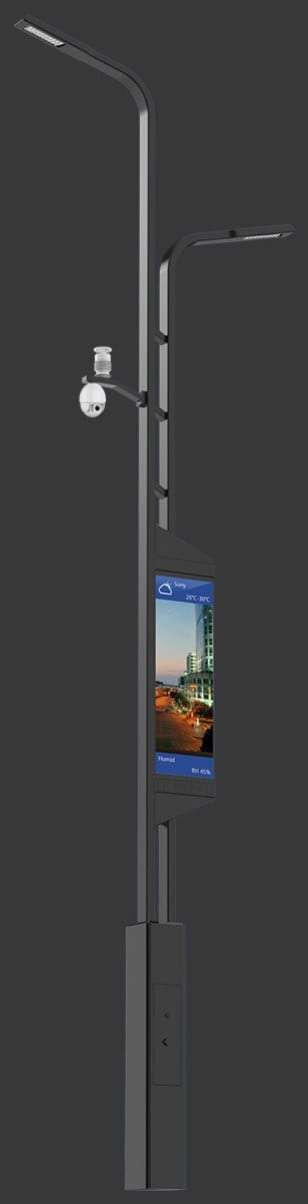
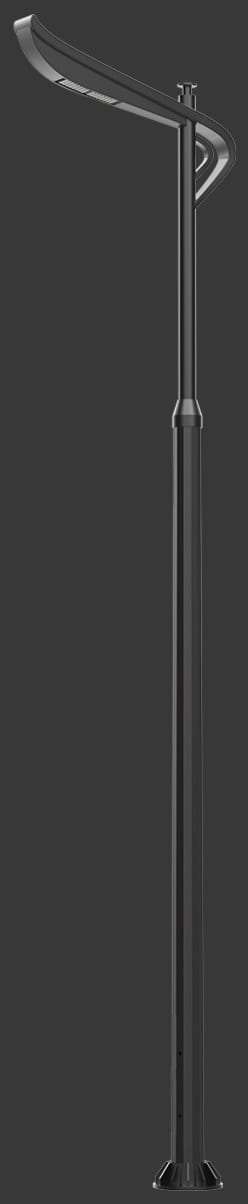
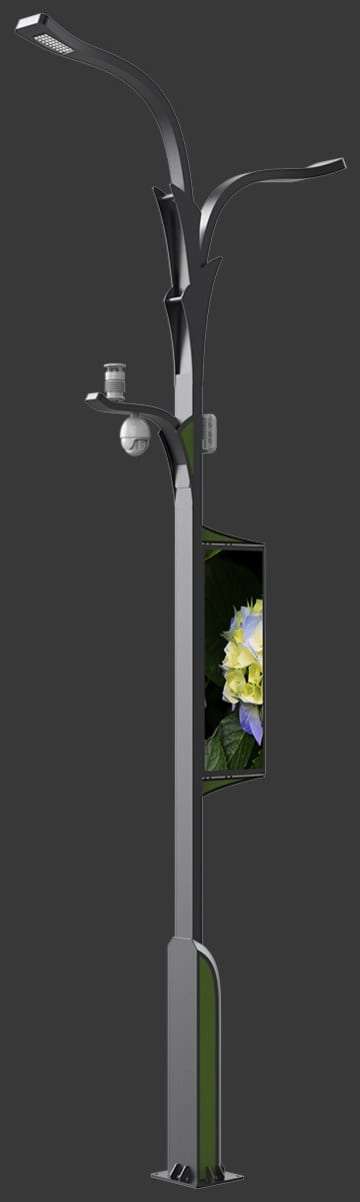
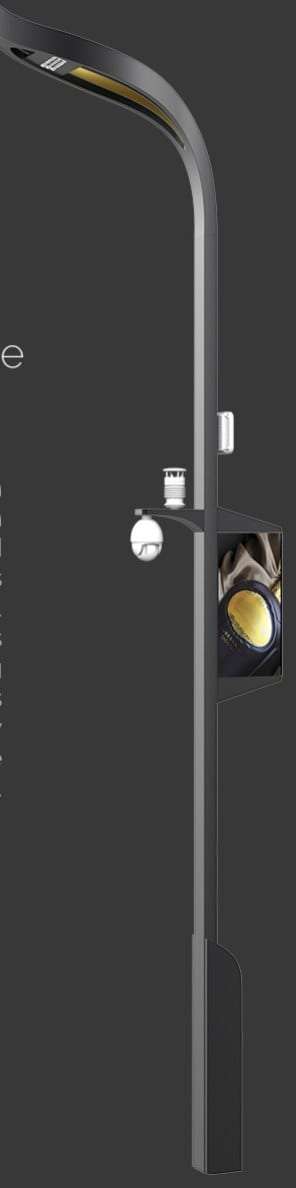
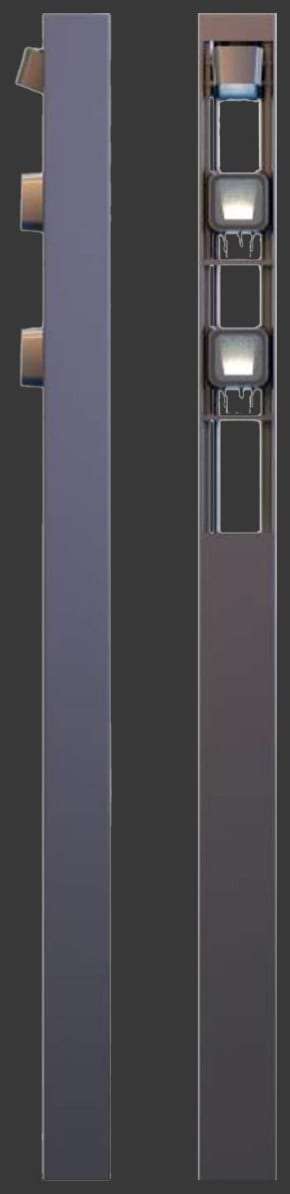
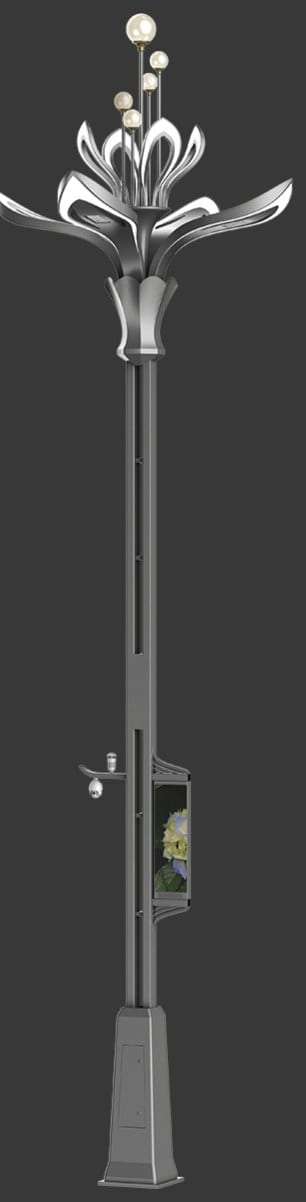
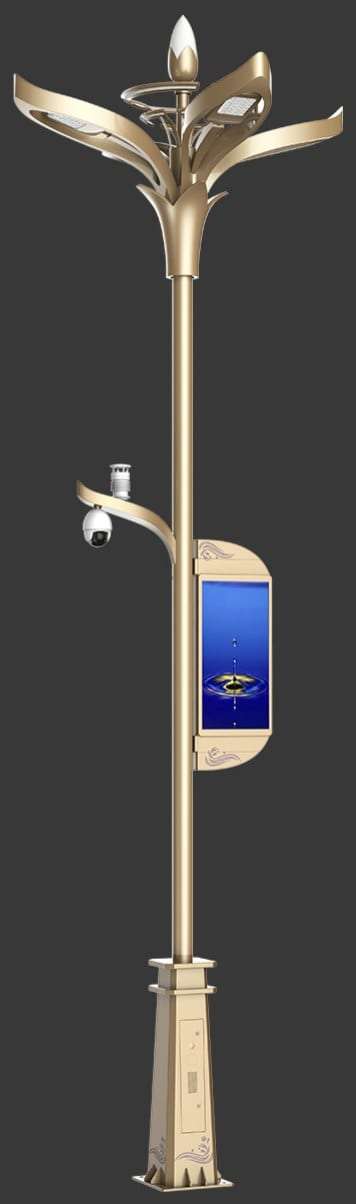
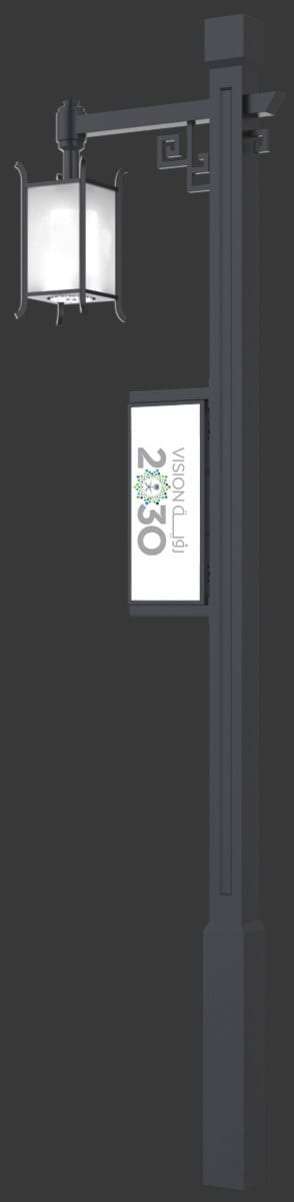
Twenty designs
From full smart-city masts down to ornamental crowns for heritage districts. Every design takes the same service payload. Open any design for its full detail.
Showing 20 of 20 designs
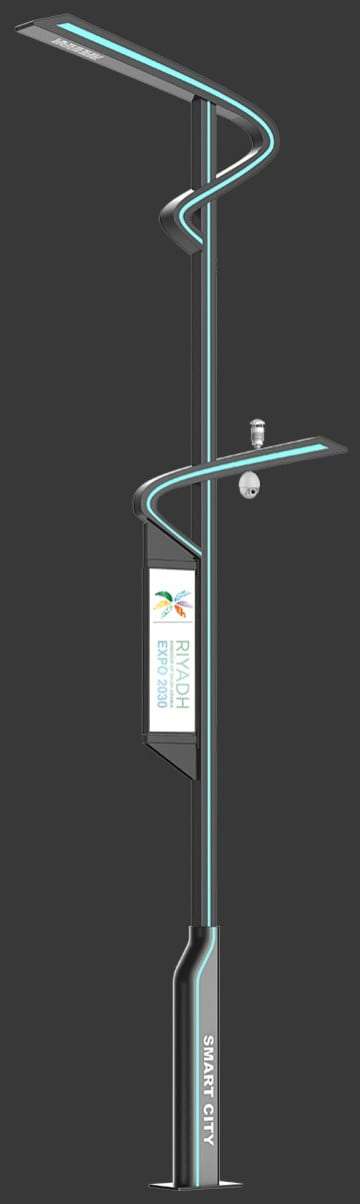
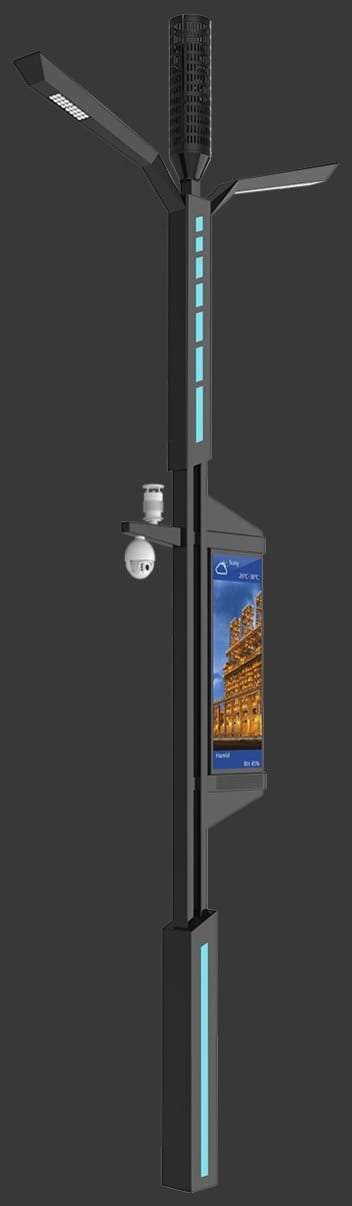
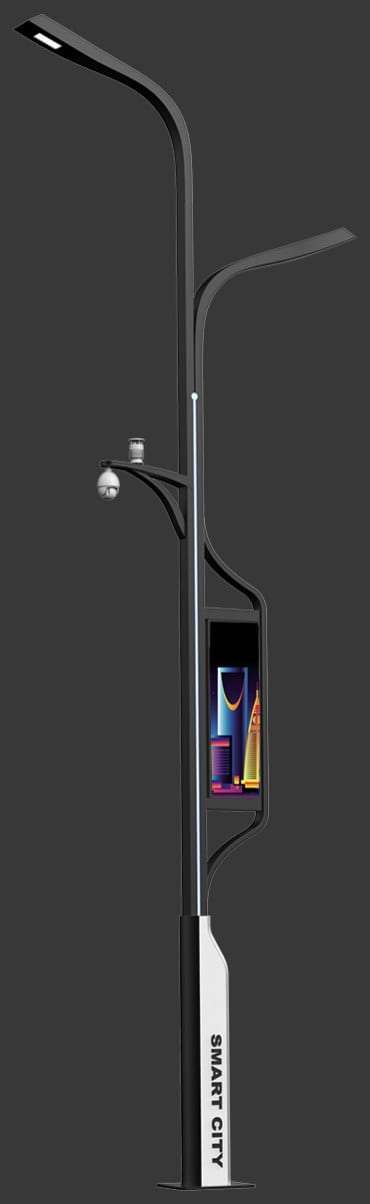
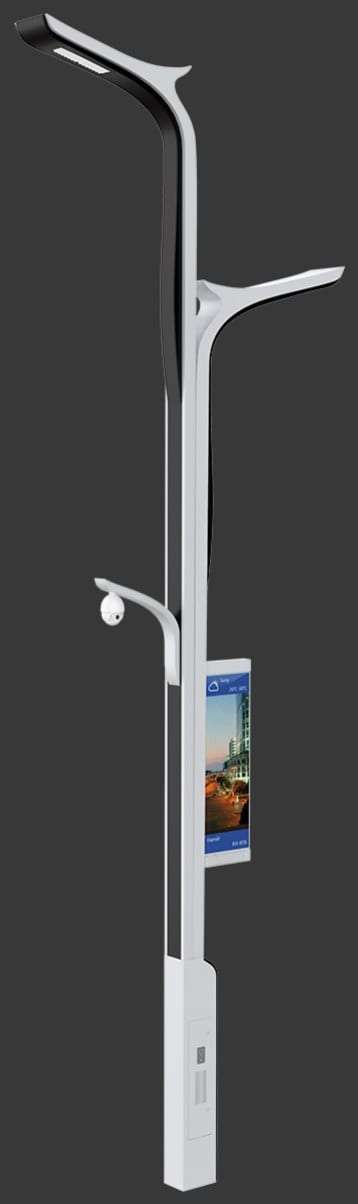
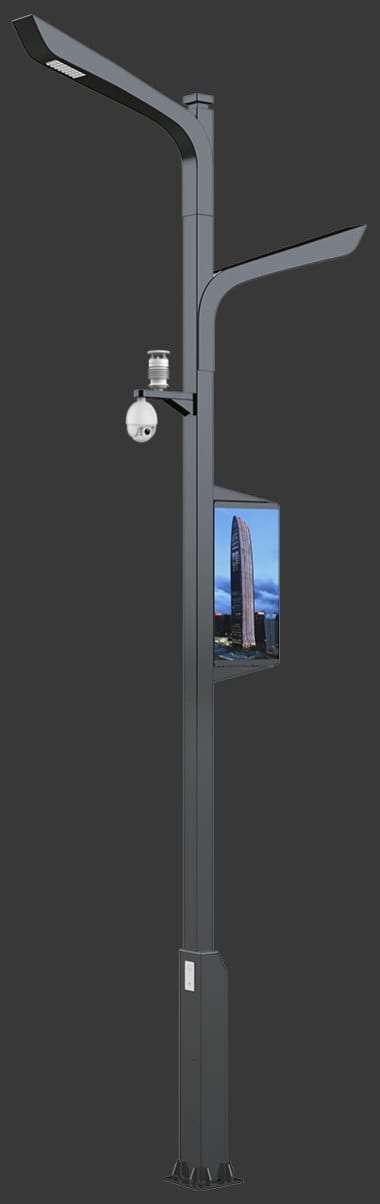
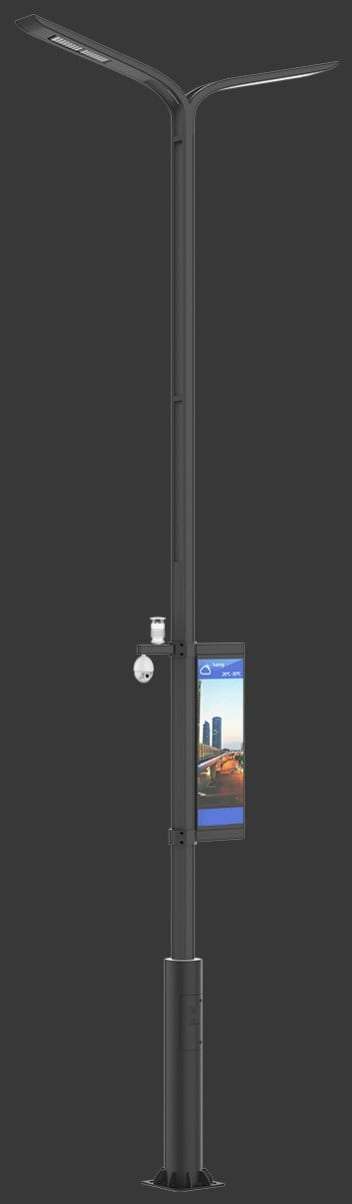
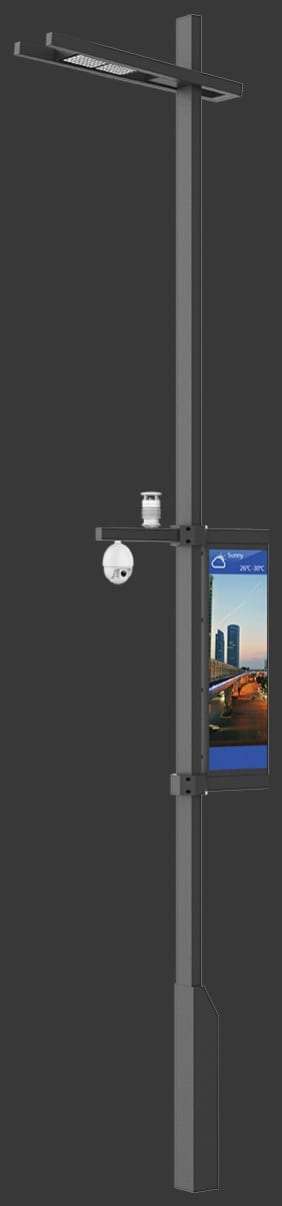
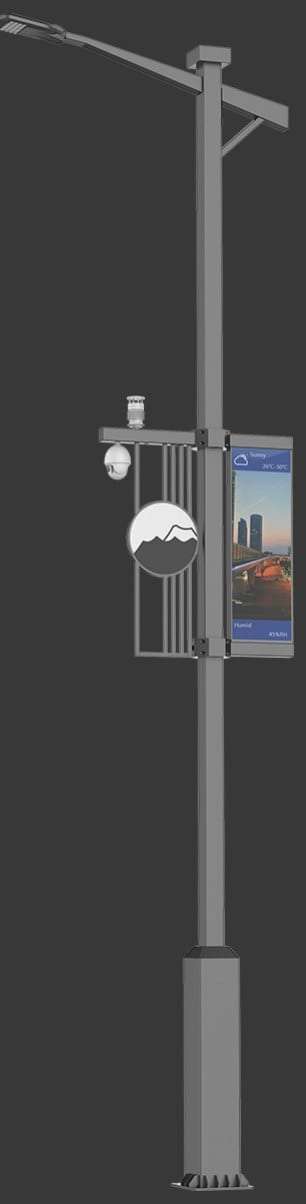

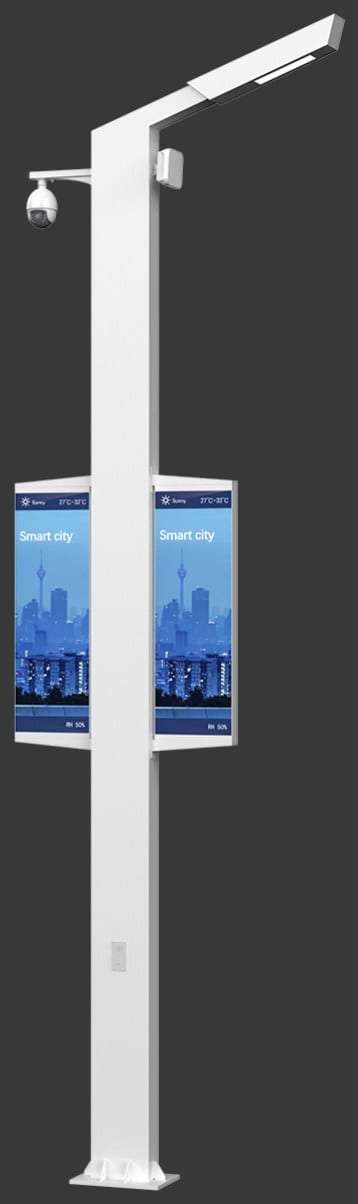
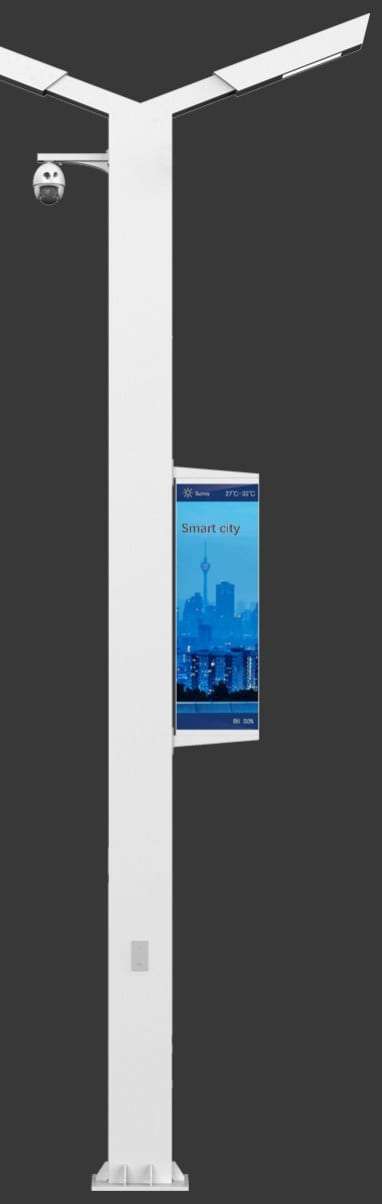
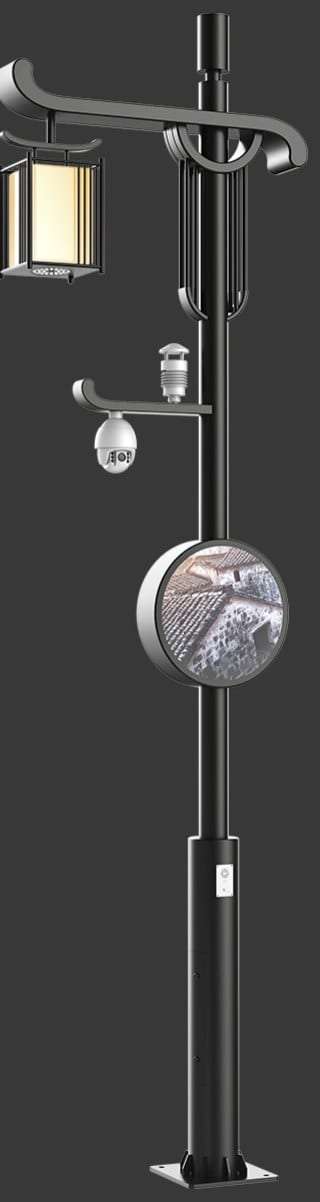
And what else it can carry
Beyond the eight systems in the diagram at the top of this page, the mast is a carrier and terminal layer for the intelligent city, built on IoT, cloud computing, big data and spatial information. What follows is what a pole can carry rather than what every pole carries: the specification is built per project.
Flexible and intelligent light control
Dimming profiles, astronomical scheduling and motion response, set per pole or per zone from the control centre.
Simple and efficient centralised control
One dashboard for every pole on the network, with fault reporting that tells you which unit failed before a resident does.
HD video surveillance and on-pole analytics
Fixed and PTZ cameras at the correct height for plate and face capture, cabled inside the shaft. Where the scheme calls for it, the analysis runs on the pole (plate recognition, crowd density, wrong-way and incident detection), so what crosses the network is the event rather than every frame.
Air quality, dust and weather
PM2.5 and PM10 alongside wind, temperature, humidity, noise and solar irradiance, sized for a climate where the defining air quality event is dust rather than traffic.
EV charging
A charge point taken off the supply already run to the shaft, so kerbside charging arrives without a second civils programme or a second object on the pavement.
IoT gateway for the wider city
LoRaWAN or NB-IoT carried on the pole, so bins, water meters, parking bays and any later sensor join the network the lighting rollout already built.
Solar hybrid and battery backup
A PV head and battery where the site wants them: the pole holds its light, its cameras and its emergency call through an outage, and can stand on a stretch with no mains run at all.
Smart parking
Bay-level detection from the pole rather than from hardware buried in the road, feeding occupancy to a parking app or to enforcement.
Smart tags
An NFC tag on every shaft. A crew scans the pole in front of them and has that unit's service history, circuit and warranty position without calling the office.
Open integration, not a closed dashboard
A documented API into the city's own platform or digital twin, on the same principle as the KNX work: the client owns the data and is never held to one vendor for the life of the asset.
Real-time traffic statistics
Vehicle and pedestrian counting that feeds signal timing, planning studies and event management.
Unified multi-service access gateway
A single gateway per pole so power, network and every connected device are provisioned and monitored as one asset.
It is already there.
Street lighting is the only public infrastructure that already stands every few dozen metres, already has a power feed, and already looks down at the street. Everything else a smart city wants to install has to find a home. Lighting has one.
One foundation, 8 systems.
Every device you hang on a pole is a device you do not dig a separate trench for, pour a separate base for, or negotiate a separate wayleave for. The civil works are the expensive part of a smart city, and the pole pays them once.
It earns twice.
Once in the energy an LED head and an intelligent control profile save against a legacy installation, and once in the cabinets, ducting and site works that never get built because the mast already carries the network.
Three layers, one system
Smart street lighting is a stack, not a product. Keeping the layers separate is what lets a city change its software without re-cabling the street.
Application layer
System integration application and control panel
Where the city actually operates the network: dashboards, schedules, alarms, reports and the integrations into whatever command platform the client already runs.
Control layer
Smart lighting control alongside traditional lighting control
The bridge between the software and the hardware. Smart control handles addressable dimming and sensor logic, while conventional contactor control stays available as a fallback path.
Terminal layer
Sensors and LED luminaires
The devices on the pole itself. Sensors report conditions up the stack, luminaires take instructions down it, and both can be driven directly from the control layer if the network is unavailable.
How ARAK delivers it
A smart pole touches lighting, civil works, low current, networking and city operations. We hold all five so the client is not left arbitrating between four contractors when a camera drops off the network.
Survey and design
Pole spacing, mounting heights, uniformity and glare calculations, plus a services schedule that says exactly which devices go on which pole. We produce the drawings the consultant and the municipality both need to sign.
Supply
Direct supply of the C°LB Smart Light Pole Series with the luminaires, gateways, cameras, sensors and display panels each design carries. Procurement, shipping, customs and phased delivery are handled by our project team.
Civil works and installation
Foundations, ducting, cabling and erection, coordinated with the road or landscape contractor so the poles go in once, at the right level, on the programme everyone else is working to.
Integration and commissioning
Gateway provisioning, device addressing, network configuration and control-centre integration. We commission the whole pole as one asset, not as nine separate devices that happen to share a shaft.
Operation and maintenance
Spares, firmware, fault response and reporting after handover. Fifty years of after-sale support on lighting is the reason clients let us put this much of the street on one pole.
On the ground
The right pole is the one that suits the street it stands on. Scale, finish and crown change. The services inside the shaft do not.
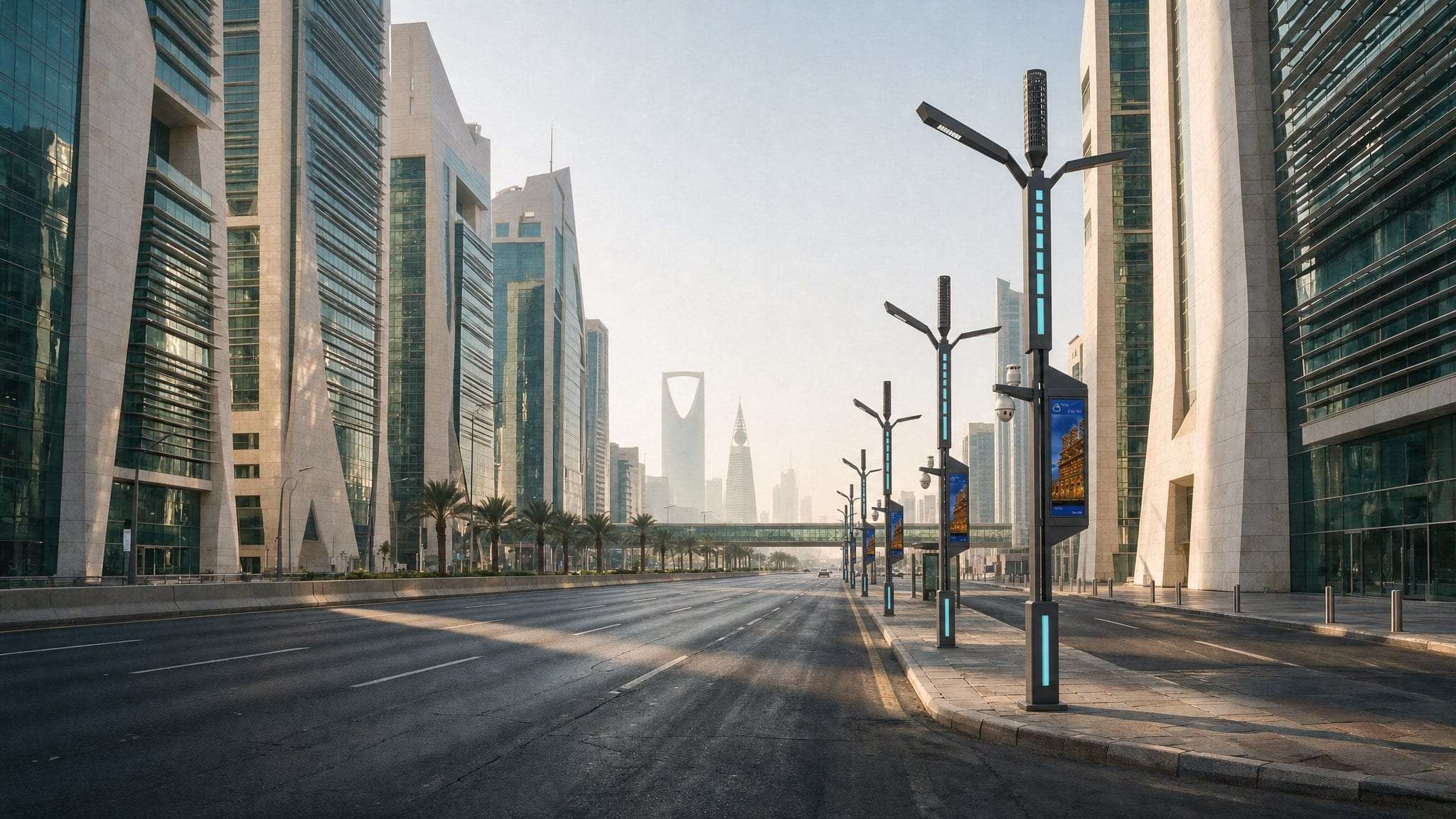
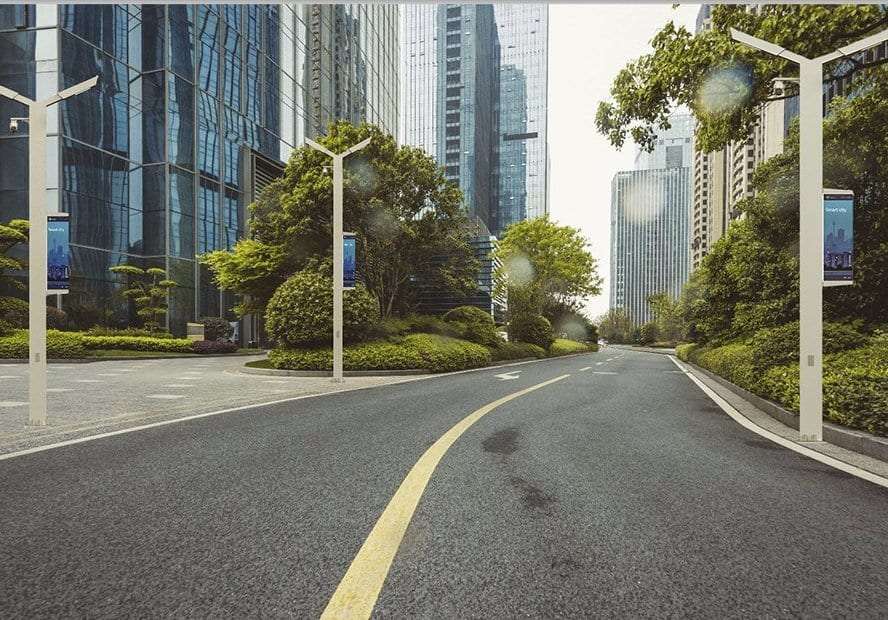
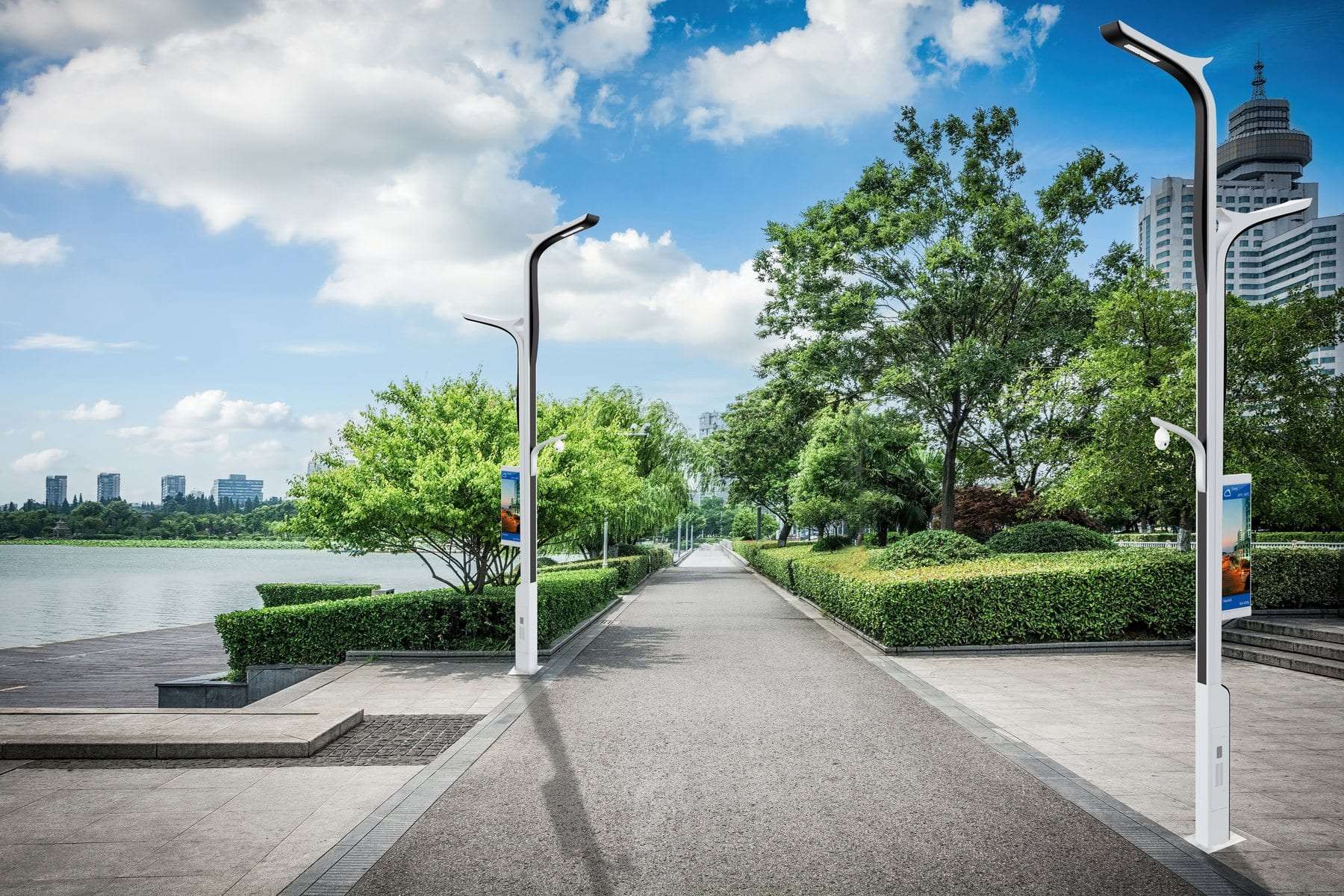
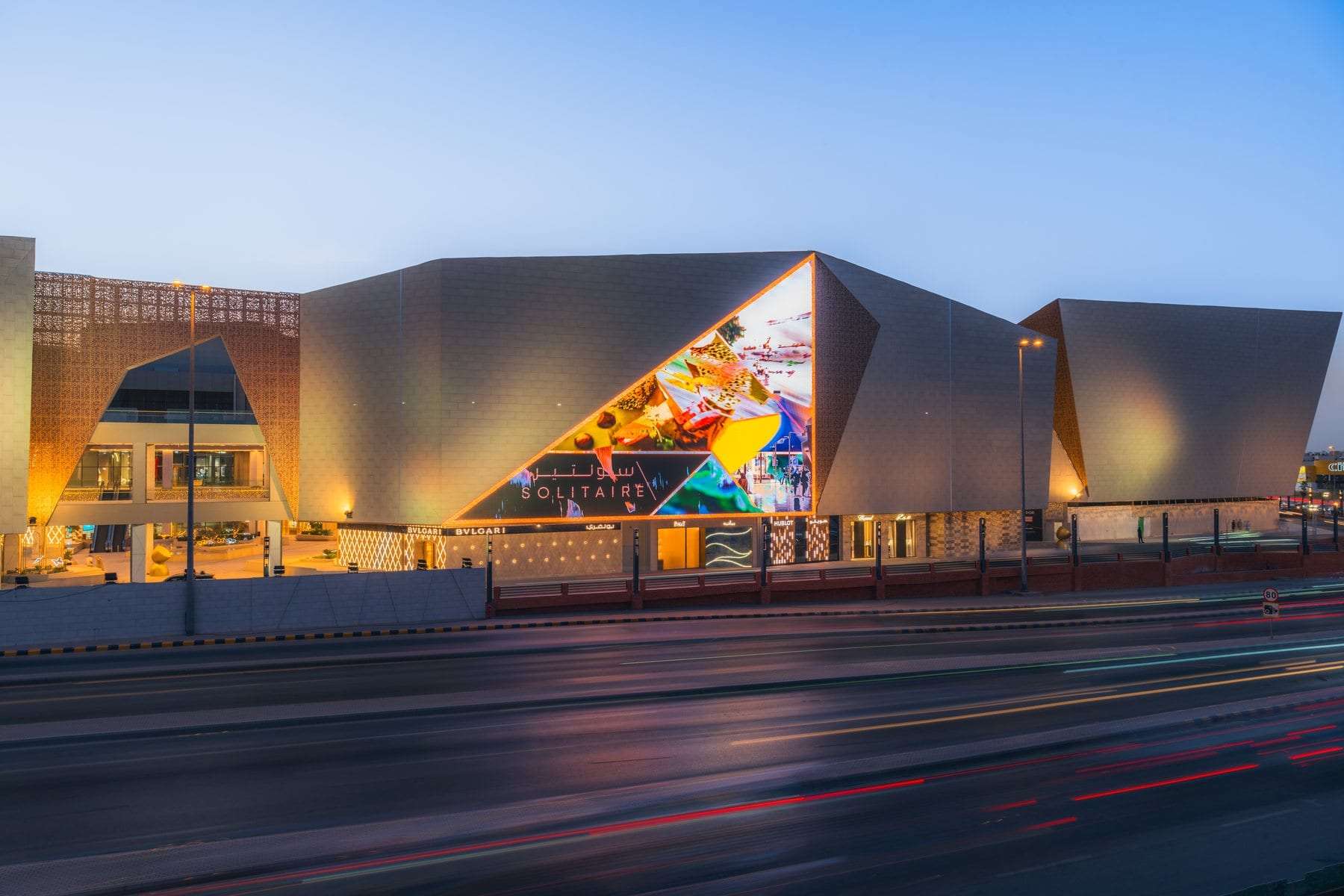
Send us the road, we will send back the pole run.
Give us the alignment, the pole spacing and the services the city wants on the mast. Our Riyadh team will come back with a design, a device schedule and a quotation.